
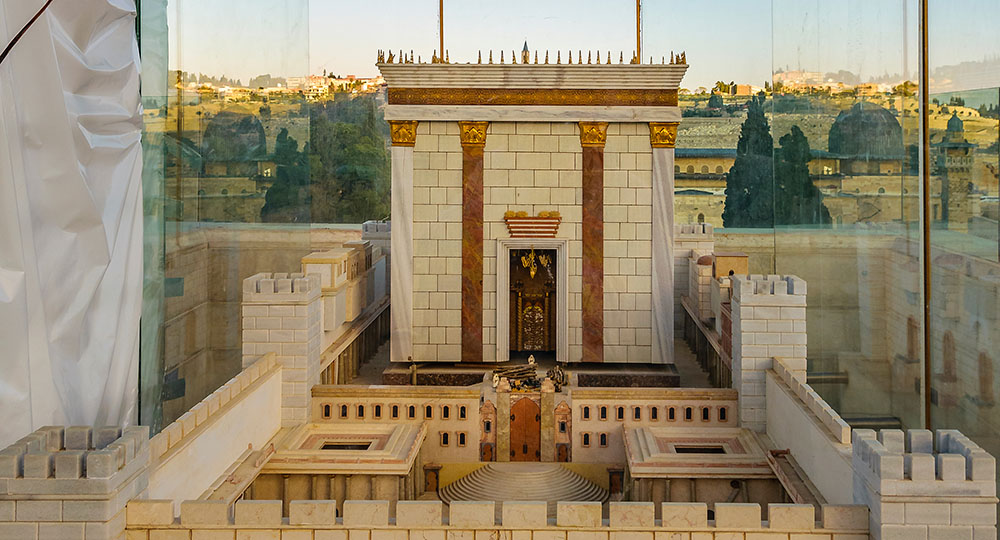
Alrighty, so we’re deep down in the trenches of examining the building of the 1st Temple.
This chapter and the one to follow are just jam-packed to the hilt with more details than you’d know what to do with.
Especially concerning the interior of this massive construction.
Honestly, I could’ve titled this lesson and the ones to follow…
“Everything In The World You’ve Ever Wanted To Know About Solomon’s Temple To Put Your Pontificating PhD Bible Professor To Shame But Were Afraid To Ask.”
But nah.
I’ve decided not to go there.
Why?
Cause I’ve got other kosher salmon to fry, homie.
And also, because some of the original Hebrew words used to describe parts of the temple and the objects inside are so freakin’ cryptic that there could be multiple interpretations.
Now, don’t get me wrong.
We’re gonna get hella nerdy on what some of the original Hebrew words for these Temple items actually meant.
We’re also gonna take a look at where the Temple was located and how it’s connected to the structures sitting on the Temple Mount today.
In many ways, the Temple’s story ends up tracking the actions of Israel’s and Judah’s kings right up until the day Nebuchadnezzar finally destroyed it.
So it’s gonna be cool!
But before we dive too deep into the weeds, there’s an important lesson I gotta impart to you homies.
And that lesson is that the Temple is NOT the main topic of discussion here.
What in the heck do you mean by that, Rich?
I mean, instead of focusing on the temple, focus on the context around it.
It’s the context that matters.
Lemme elaborate.
God had indeed designated a spot where He would come to dwell with His people.
And the design of the Temple constructed on that spot reflects heavenly principles.
But don’t confuse the horse with the cart.
Just because God had an address down here doesn’t mean that’s where He lives.
The Lord is spiritual and dwells in heaven.
And the Temple wasn’t even for the Lord’s benefit in the first place.
It was for our benefit.
Just like the Shabbat was also created for our benefit.
Remember, the Lord never asked that we build some magnificent building for Him.
He’s perfectly fine to commune with us anywhere.
He demonstrated this by communing with David in a humble tent.
And that’s your takeaway for today.
God doesn’t need some opulent and magnificent piece of architecture to fellowship with us.
You can commune with Him in a broken-down shack with holes just as much as you can at the Wailing Wall in Jerusalem.
The Messiah even said so himself.
This is an important topic.
So we’re gonna discuss this a bit more the next time we meet.
Later!
CONNECTING THIS TEACHING TO THE NEW TESTAMENT
“’Woman,’ Yeshua replied, “believe me,
a time is coming when you will worship the
Father neither on this mountain nor in Jerusalem.
You Samaritans worship what you do not know;
we worship what we do know,
for salvation is from the Jews.
Yet a time is coming and has now come
when the true worshipers will worship
the Father in the Spirit and in truth,
for they are the kind of worshipers the Father seeks.
God is spirit, and his worshipers
must worship in the Spirit and in truth.’”
-John 4:21-24


I am reminded of an old Jewish conundrum:
If God is everywhere at once, then how can he “go down” to the earth, as it says he does in the Bible?
The same goes for him living in the Temple.
Interesting. Never heard that. Thanks for sharing.