
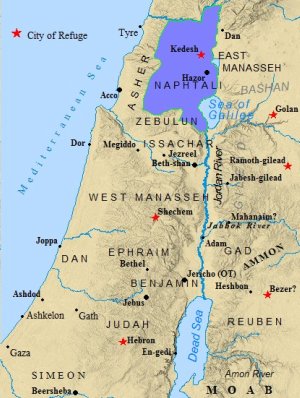
Alrighty, let’s have a little fun today as we go through the names of the next 3 districts contained in 1st Kings Chapter 4.
One by one, I’m gonna name the territories, and then I want you to tell me what key event or person is associated with that area.
Ready?
QUESTION 1:
“What is significant about the 7th district represented by the city of Mahanaim, located in the eastern Jordan Valley?”
QUESTION 2:
“What is significant about the 8th district identified as the tribal territory of Naphtali?”
QUESTION 3:
“What is significant about the 9th district, identified as the tribal territory of Asher, but also probably included the territory of the tribe of Zevulun?”
So, in a separate piece of paper or something, write down your answers.
Heck, you might come up with something totally different, I might not have in my answers.
However, unless you’re really an astute Bible student,
I’m assuming most of you are gonna fall flat on your proverbial faces here.
Alrighty, since this is a blog post and I’m not conducting this live, let’s get on with the answers.
ANSWER 1:
Mahanaim was a royal city for a short period of time.
It’s notable because it was used by Ishbosheth (not to be confused with the crippled Mephiboshesh), son of Saul, when he took over for a very brief time as king.
The tribal territory of Gad was also included in this district.
ANSWER 2:
Okay, this territory has some serious messianic connotations.
Check out this tidbit from the prophet Isaiah:
“In the past he humbled the land of Zebulun and the land of Naphtali, but in the future he will honor Galilee of the nations, by the Way of the Sea, beyond the Jordan—The people walking in darkness have seen a great light; on those living in the land of deep darkness a light has dawned.”-Isaiah 9:1
That’s right!
This area would later be called Galilee, which is where Yeshua began his ministry.
It was also considered an agricultural hub of commerce.
Crops grew abundantly in this region, and roads representing all four compass directions were connected to the area.
The name of the commissioner of this area was Achima’atz, and like the son of Avinadav, he had also married one of Solomon’s daughters.
ANSWER 3:
The 9th district, represented by the tribal territory of Asher, is associated with abundance, prosperity, and one very overlooked New Testament figure.
First, Moses gave this blessing over Asher:
“May Asher be blessed above sons; may he be favored by his brothers, and may he dip his foot in oil.”-Deuteronomy 33:24
That “oil” is likely referring to olive oil because Asher’s territory was super fertile and loaded with olive groves.
In fact, Asher became known as one of the wealthiest agricultural regions in all of Israel.
Jacob also prophesied this over Asher:
“Asher’s food will be rich; he will provide delicacies fit for a king.”-Genesis 49:20
So this territory became associated with richness, abundance, prosperity, and royal-quality food.
BUT…
There’s another super cool connection most believers totally miss.
Remember the prophetess Anna from the New Testament?
The elderly woman who recognized baby Yeshua at the Temple?
Luke specifically tells us she was from the tribe of Asher!
Check this out:
“There was also a prophet, Anna, the daughter of Penuel, of the tribe of Asher…”-Luke 2:36
Why is that significant?
Because by the time of Yeshua, the so-called “10 lost tribes of Israel” had supposedly disappeared.
Yet here we suddenly discover a faithful Jewish woman from the tribe of Asher worshipping at the Temple in Jerusalem and immediately recognizing the Messiah.
Pretty awesome little detail most people skip right over.
Alrighty, that does it for today, homies.
See ya all next time.


How to correctly understand the relationship between T’NaCH common law TO Talmudic common law – based upon the DAY/night difference between Yovel vs g’lut.
1 Shmuel טז; יז:א-לז does not compare to later Tehillem in general nor to סז in particular. Why? Primarily due to the T’NaCH/Talmudic common law sh’itta of scholarship. 1 Shmuel טז; יז:א-לז serves as a precedent to Moshe anointing the House of Aaron as Moshiach. Clearly the distinction of the Prophet Shmuel learns the Torah mitzva of Moshiach as לאו דוקא, just as Isaiah referred to king Cyrus as “moshiach”! Tehillim סז limited to the Sinai revelation of mitzvot לשמה as תורה לא בשמים הוא. The sovereignty of 13 tohor middot ה’ ה’ אל רחום וחנון etc restricted unto the Yatzir Ha’Tov within the בכל לבבך. Hence tefillah דאורייתא restricted to the mitzva of kre’a shma wherein a Jew accepts the “yoke of the kingdom of Heaven” ie tohor middot as the dominant guide spirits within his heart. These 13 tohor spirit “middot” referred to as the 13 middot of mercy.
Mitzvot לשמה falsely understood by Goyim who reject the revelation of the Torah at Sinai falsely assume that this critical term refers to “commandments for their own sake”. No such thing as “commandments for their own sake”. All later Torah commandments fall under the heading of the blessing/curse first two Sinai commandments. Hence all commandments לשמה either serve as specifics of blessing or curse/Life or Death.
The mitzva of Moshiach no different from the mitzva of shabbat; both this and that a wisdom/time-oriented positive commandment. Just as shabbat applies to all generations of Israel so to the mitzva of moshiach applies to all generations of Israel. Moshe anointed the House of Aaron as “moshiach”; Shmuel anointed Shaul and David as moshiach; Eliyahu serves as the sign of the moshiach etc etc etc.
The restrictions on tefillah דאורייתא to the mitzvah of Kri’at Shema highlight the expectation of accepting the “yoke of the kingdom of Heaven”; understood as the dominant guiding רוח הקודש middot – Oral Torah – revealed to Moshe following the sin of the Golden Calf word substitution of אלהים for the שמ השם restricted only to judicial judgment of justice in this world by means of מלכות – tohor רוח הקודש middot which rule the Yatzir Ha-Tov within the heart.
Tehillim סז constitutes as a prayer. Prayer by definition not a tefillah blessing because the latter requires swearing an oath inclusive of שם ומלכות preconditions. False oaths attributed to the Floods in the days of Noach. All wisdom commandments/time-oriented mizvot fundamentally and absolutely require k’vanna (שם ומלכות) which Tehillim שבחים/praise fundamentally lack.
1 Shmuel: טז:א-יג does not stand upon its own two feet any more that Gemara halachot. Just as the latter serve to understand the k’vanna of a specific Mishna viewed from a fixed “witness” perspective, so too the Books of the Prophets likewise view Torah commandments from this secondary relationship to Av Torah commandments.
Rabbi Yochanon in mesechta ברכות teaches the halacha that a ברוכה צריך שם ומלכות. Kre’a Shma, the Cohen blessing, the Kadish prayer and the Shemone Esrei all lack שם ומלכות according to the טיפש פשט literal reading of the words.
The pre-condition of שם ומלכות separates wisdom commandments which require k’vanna from תולדות מצוות which do not require k’vanna. The latter secondary commandments serves as בניני אבות by which the generations of Israel can elevate secondary תולדות מצוות to Av tohor wisdom time-oriented commandments. The concept שם depends upon Yovel. Just as Israel slaves in Egypt could not do mitzvot לשמה in g’lut.
Baba Batra 12b specifically instructs that following the sealing of the T’NaCH all future teaching rely upon the masoret of the sealed traditions; “אין נביא רשאי לחדש דברים” . This Talmud serves to reinforce the authority of the written Torah and the Oral Tradition as the permanent guide which determines Jewish culture, tranditions, and life-styles; ensuring that spiritual practices and interpretations remain grounded in the established texts. For example: Rav Saadia Gaon views mitzvot as expressions of Oral Torah divine middot.
Nevu’ah NEVER the source of post g’lut halacha – as codified in both the Mishna and Gemara; anymore than Aggadah serves as the source of Rabbinic Middle Ages Halacha! Rather/אלא the Aggada makes a פרדס דרוש back to NaCH nevu’ah sources to seek the prophetic mussar and to affix this prophetic mussar as the k’vanna of doing halachah as an elevated wisdom\time-oriented commandment from the Torah.
LOL brother.
I appreciate the passion, but I’m not trying to turn a simple post about Solomon’s districts into a high-level Talmudic symposium. 😄
I just wanted to highlight some Biblical connections tied to these tribal territories, especially the Galilee/Naphtali connection and Anna from the tribe of Asher.
What you wrote is more connected to discussions about halacha, kavanah, tefillah, and Oral Torah methodology than to what I wrote.
Thanks.
Yes quite correct. But real Torah scholarship understands the most basic fundamental כלל of the Torah. Torah commands mussar, it does not teach history.
It may not teach history.
But isn’t history (specifically Israel’s history) a fundamental part of Torah?
No. Physical evidence of Israelites in Egypt – none to speak of.
Can you say: “Avoda Zarah sucks”?
The 2nd commandment forbids any and all comparisons to anything in the Heavens, Earth, or Seas. Words convey ideas just as do all forms of פסל. פסל inclusive of “word images” based upon the Golden Calf/אלהים. The כלל second commandment of Sinai defined through the פרט of the Golden Calf אלהים – פסל word translation! פסל does not translate into carved idol any more than “Give to Caesar what is Caesar’s, and to God what is God’s.” fulfills the words of the prophets! Θεός (Theos) no different from אלהים\Golden Calf!
The second commandment indeed prohibits any representations or comparisons to God, explicitly rejecting idolatry in all forms—physical, verbal, and conceptual. This includes any attempt to reduce the divine essence to human understandings or depictions. The understanding of פסל extends beyond the טיפש פשט “carved idols.” The gospel parallel between Θεός (Theos) with אלהים (Golden Calf) exposes the fundamental negative commandment which curses avoda zara. Attempts to restrict avoda zara to graven images, the prophets utterly mocked in total absolute contempt. This same vomit equally applies to the theological nonsense called “Monotheism”.
Neither the ancient Greeks or Romans or Church or Mosque ever to this very day accept the revelation of the Torah at Sinai – to pursue justice: fair compensation of damages through common law courts of law. תורה לא בשמים היא. Pirkei Avot instructs in ג:ב — כל אדם שמביט למעלה ולמטה ולפנים ואחור – טוב לו שלא נברא. The NT simple a cheap counterfeit fraud. אלהים and Θεός (Theos) serve as linguistic representations – both of which communicate “interpretations” “beliefs” “theologies” about God(s)! Isaiah openly mocked wooden carved idols made from wood used to heat ones’ home!
Therefore the Torah restricts “faith” to צדק צדק תרדוף. The utter nonsense of the gospel parallel between Θεός (Theos) with אלהים (Golden Calf) exposes the fundamental negative commandment which curses avoda zara, specifically through the gospel of “Give to Caesar what is Caesar’s, and to Θεός what is Θεοῦ..” Only the gospel “Lord’s Prayer” which directs prayers unto Heaven rather than within the heart expresses greater total ignorance and stupidity.
Human beings cannot comprehend the divine any more than a worm can comprehend human civilization. Therefore any attempt to conceptualize, describe, or “image” God — even in words — Av tumah avoda zarah. The Torah explicitly defines the differences which separate tohor from tuma spirits! To restrict פסל blind to the distinction which separates tohor from tuma spirits – simply טיפש פשט. Greek Θεός and Hebrew אלהים both – human attempts to conceptualize that which Man simply cannot grasp much less understand. Torah never commands “believe in God.” Torah commands “do justice,” “walk humbly,” “remember,” “act,” “judge,” “pursue.”
The Second Commandment prohibits any human attempt to conceptualize, describe, imagine, or linguistically represent the divine. Therefore פסל includes not only statues but all human God‑concepts — including אלהים, Θεός, “monotheism,” and theological language itself. The sin of the Golden Calf teaches that the ערב רב שאין להם יראת אלהים – did not worship “another god”; they worshipped a prepresentation of the God of Sinai. No different from later avoda zara which worships the stars as representatives of the Gods as Gods in their own right.
Isaiah command straight mussar: ואל מי תדמיון אל? No likeness, analogy, metaphor, conceptualization, theological creed/linguistic labels (אלהים, Θεός, Deus, Trinity, Tawhid, Allah) can jump from finite to beyond infinite. The gospel counterfeit introduces a philisophical argument; nothing more other than the essence of avodah zarah, dressed up as political theology.
Torah Commands Justice, not Belief: לא תטה משפט; לא תכיר פנים; לא תעשוק; לא תגזול; לא תעמוד על דם רעך. Neither the church or mosque has ever “fulfilled” this prophetic mussar. The Sinai revelation commands faith as the righteous pursuit of justice through Sanhedrin Torah mandated common law courtrooms.
An interesting dialogue with a believer Xtian
” The Hebrew Scriptures repeatedly speak of God’s promises, covenants, and prophetic words coming to pass.”
The question asked by me: Why? ברית does not correctly translate as covenant(s) but rather oath alliance which requires שם ומלכות based upon the בניני אבות of blessings which stand distinct from שבחים such as Tehillem which lacks שם ומלכות to swear a Torah oath. 2nd: Prophetic mussar grows through its rebuke(s) within the Yatzir Ha-Tov hearts of all generations of bnai brit Israel.
The p’suk D’varim 6:25 located in the 4th sugya(sub-chapter) of the פרק(chapter) that opens with שמע ישראל and concludes with אנכי מצוך היום לעשותם. All Torah sages agree – without dispute – that סמוכים [( סמוך meaning “adjacent” or “contextual”)] applies throughout the Book of D’varim/משנה תורה; meaning all sugyot(sub-chapters) contained within a פרק closely related and based and influenced upon one another – interrelated. This principle posits that the verses within each chapter contribute to a unified message or theme. In this case, Deuteronomy 6:25 sits within a framework that discusses acceptance of the “Yoke of the Kingdom of Heaven”. The foundation of this Great wisdom commandment(time-oriented mitzva) יראת שמים – understood to mean: “Baal Shem Tov” or “master of ones’ good name reputation” touching “righteousness”.
The cherry-picking manner of the gospel cheap counterfeit denies this fundamental basis by which Jews – who stood and accept the Torah revelation at Sinai – understand “our” Torah. This gospel practice of cherry-picking, or taking verses out of their broader context – Roman gospel propaganda. Employed to undermine the richness of the Torah as understood within Jewish tradition, and therein to promote Civil War. Far easier to destroy a Jewish revolt when Jewish sects destroy one another at the same time! Read your Josephus “The Jewish War”, there he tells how the warring sects of Jews fought as viciously against one another as they did the Romans themselves. One sect destroyed the storage granary in Jerusalem which caused a famine in the city early on during the Roman seige!
“You shall not take vengeance or bear a grudge against the children of your people, but you shall love your re’ah as yourself.” The Greek translation “neighbor”(πλησίον) inclusive to Goyim. Whereas רע/re’ah applies strictly and only to bnai brit. For example: the Book of D’varim lists two types of Goyim living within the borders of the land: the ger toshav vs. the na’cree. The ger toshav enjoys the right to sue an Israel for damages inflicted whereas the despised refugee such as the folk that the Assyrian king planted inside the uprooted kingdom of Israel, those refugees converted out of fear of lions! Those despised refugees had no judicial rights to sue an Israel for damages.
The use of πλησίον in the Septuagint reflects differences in theological emphasis and interpretation between Jewish and later Christian understandings of the commandment. This distinction quite significant for understanding how ethical teachings in the Hebrew Scriptures – applied. For 2000+ years Jews have attempted to inform Goyim that belief in that Roman false messiah – a lie. Why? The mitzva of Moshiach no different from any and all other wisdom commandments within the Torah – shabbat for example. Wisdom commandments apply equally to all Jews in all generations. The Roman forgery NT JeZeus introduces a lie false messiah God akin to Caesar who too called himself the “Son of God”.
Making a טיפש פשט literal reading of this prophetic mussar “metaphor” serves as a gross example, on par with the Xtian literal reading of the Creation story in בראשית, which ignores the opening introduction Main theme of the Torah – wisdom commandments//time-oriented mitzvot! Isaiah does not “add” to the nevuah of Moshe Rabbeinu! The mitzva of Moshiach a wisdom commandment no different from shabbat! All bnai brit obligated to pursue justice among our people. Just that simple. The NT perversion injects through the distortion of your Apostle Paul’s “original sin” that the messiah takes away all sin! What utter and total nonsense. King David cursed for his failure in the matter of Uriah baal of Bat Sheva.
Because Goyim reject the revelation of the Torah at Sinai (All 5 Books of the Torah revealed at Sinai). They fail disastrously to distinguish the revelation of the שם השם in the first commandment to the בראשית Names known to the Avot אל, אל שדי, אל עליון etc. Just as Goyim – starting with your imaginary Harry Potter messiah did not know how to distinguish between מלאכה from עבודה because the Greek language lacks this subtle nuance, and therefore totally miss the main theme of the Torah, introduced in the בראשית Creation “aggadah” story – wisdom time-oriented commandments require k’vanna!
The first commandment שם השם the Torah openly states that the Avot “did not know”. Now what separates the revelation of the first commandment שם השם from the Divine Names which the Avot called upon? ברית חדש of the prophet Yermia’s mussar directly turns to the main theme of the Torah introduced in the בראשית aggadah! Post Sinai revelation: תורה לא בשמים היא. Prior to this revelation תורה בשמים ובארץ. The pursuit of justice among our people – herein defines the “FAITH” of the Jewish people as expressed through the Torah constitutional mandate of Sanhedrin common law lateral courtrooms. The forth Book of the Torah returns the Wilderness Generation back to the Torah 2nd commandment curse of g’lut/exile. This theme first introduced with the expulsion of Adam, the curse placed upon Cain, the floods of Noach etc etc etc. The Wilderness generation preferred g’lut over invading and conquering Canaan for the explicit purpose of making the Torah the Constitution of the Republic of 12 Tribes.
Torah Stands Unique as the Sinai revelation.
Only the 12 tribes of Israel accept the God of Sinai. Which God does Hebrews 3:4 refer to – Zeus or Saturn? The Gods of India or Japan or China? The theology of Monotheism, a pie in the sky Creed developed by both Xtianity and Islam Universal God in Heaven – Faiths; just as these two despise the Gods worshipped by the other, so too and how much more so – both despise the God of Sinai which these av tuma avoda zarah religious belief systems fundamentally reject; never once the שם השם in either the Xtian Bible or Arab/Muslim Koran.
The NT manuscripts employ Theos (θεός), a Greek noun with a long history of referring to Zeus, the gods of Olympus, and later the philosophical “First Cause.” The phrase “builder of all things” echoes: Plato’s Demiurge; Stoic Logos; Hellenistic monotheism (a universal cosmic deity). A Hellenistic philosophical “God” that emerged after Alexander’s conquests, a universalized abstraction that absorbed Greek metaphysics and Near Eastern motifs. A universal deity that Xtianity and Islam later adopted — a deity fundamentally incompatible with the Sinai revelation. Hebrews 3:4 is a perfect example of this: It uses Theos, a Greek word with no brit authority. The Pauline faith = belief in a divine human sacrifice.
Any translation of the שם השם to any word = the Sin of the Golden Calf wherein the ערב רב translated the שם השם to the word אלהים. The Sinai revelation – a local tribal god worshipped privately by Avraham, Yitzak and Yaacov. Monotheism promotes belief in some Universal GOD of all mankind. The Creation story serves as the Model introduction of wisdom commandments\time-oriented mitzvot – such as later brit melah, the Gid Hanasheh, Yivum – forbidden to marry two sisters at once b/c it provokes jealously.
YHWH an English transliteration of Hebrew letters רוח הקודש, does not equal word translations: such as Allah or Lord or YHWH. Neither the Catholic Bible nor any Protestant Bible writes YHWH. Proof its a much later nonsense. Forbidden to pronounce שם השם, because in doing so a person perverts this Spirit unto into a word – which the lips can pronounce! Akin to comparing the שם השם to anything in the Heavens Earth or Seas. All Torah commandments absolutely dependent upon the 1st Sinai commandment. Neither the Xtian bible nor the Arab/Muslim Koran ever once accepted the first two Sinai commandments which all other Torah commandment hinge upon.
Never a “Decalogue”. Confusion on this fact: a טיפש פשט on par with a literal reading of the Creation story as history. Torah commands mussar, it emphatically does not teach history. Both av tuma religions, worship physical history in that both absolutely require a physical JeZeus and Muhammad. The Pesach story teaches the mussar of Yovel as the יסוד of doing wisdom commandments through the לשמה k’vanna. Hence the first act of Israel upon entering the land brit melah and Yovel as expressed by the establishment of the 6 Small Sanhedrin courts in the Cities of Refuge! No Yovel No Torah common law. Just that simple.
Neither av tumah avoda zara religion even once discerns between בראשית – ברית אש — brit understood as an oath alliance based upon the consequent of the floods in the days of Noach wherein that generation swore אש false oaths. Covenant does not even hint, much less imply swearing a Torah oath. The latter follows the distinction which separates the kre’a shma blessing from Tehillem praises. Blessings as תולדות to brit oaths, hence kre’a shma requires either standing before a Sefer Torah or sitting after placing tefillen. Tefillen like unto a Sefer Torah in the matter of swearing a Torah oath/brit.
NT writers, for example the Apostle Paul confused the “sign” of the brit for the actual oath brit itself. The actual Torah brit – wisdom commandments/time-oriented mitzvot first introduced through the Creation story itself. The rainbow like melah the sign of wisdom commandments/time-oriented mitzvot. Paul’s avoda zara negated brit melah as the “sign” of the brit of wisdom commandment observance!
Pauline theology perverts “faith” away from judicial justice in the land of Canaan unto faith in JeZeus as God – which later morphed into the Trinity dogma creed established at Nicene in 325CE! A wisdom commandment require k’vanna which prioritizes tohor middot revealed at Horev ה’ ה’ אל רחום וחנון etc; the sage rabbi Yochanon established the halacha that a blessing requires שם ומלכות wherein a bnai brit Israel dedicates one or more or even all Oral Torah Horev middot לשמה – through swearing a Torah oath. Rabbi Yechuda Ha’Nasi – based upon the משל\נמשל revelation of the Sinai Mishkan established the halacha that the Shekinah dwells within the “Mishkan” Yatzir Ha-Tov within the heart.
The theology of Hebrews simply not the Courtroom Law of the Torah; and it does not preserve the Sinai commandments. The NT originally written in Greek and its Greek vocabulary superimposes Greek culture and customs upon critical Hebrew verbs which perverted the intent of these verbs completely. Agape does not mean kre’a shma “love”. Covenant does not mean oath alliance “brit”. Pauline faith in JeZeus as God clearly rejects the Yoval יסוד of the first Sinai commandment just and distinctly as the lands of Esav and Moav lie outside of the Cohen inheritance of Canaan. The Gospel “greatest commandment” totally perverts the restriction to worship the Sinai God within the oath brit Cohen land inheritance of Canaan as the “blessing” obligation of faith.
Hebrews 3:4 compares to the av tumah error of king Shlomo who both himself and his son at Sh’Cem failed to heed the elder advisors; Shlomo ignored the mussar command of the prophet Natan. The “Blood on his hands” משל instructs the mussar rebuke נמשל – David failed to judge Uriah through a Capital Crimes Great Sanhedrin Court! This Torah mandated Court system David and how much more so his son Shlomo failed to sanctify despite the anointing of Moshiach to this primary purpose. Foreign wars come as the primary consequence to Israel doing avoda zarah. Based upon the contrast between the first generation who conquered Canaan on the Pesach/Yoval יסוד and the next generation who abandoned the obligation to judicially judge the brit people through Sanhedrin common law courtroom justice.
The av tuma NT fundamentally violates the Hanaukkah lights as a mitzva from the Torah according to the B’HaG; it reframes the Torah primary obligations through its word translation perversions. Not the משל rabbinic ritual Hanukkah lights, but the נמשל k’vanna דאורייתא, not to interpret the Written Torah with any foreign logical authority (The Greeks caused Israel to forget the “Oral” Torah.), but the Oral Torah רוח הקודש tohor spirits learn in conjunction with the 7, 10, 13, & 32 rabbinic middot through which both Mishna and Gemara serve as the model of Torah mandated courtroom common law when in the future Jews reconquer Canaan; the brit cut with the Avot who endured injustice by Avi Melech’s theft of Sara and the sale of her burial crypt through the theft of water-wells and rape of Dinah.
[Yovel, Sanhedrin, Cities of Refuge existed as concrete institutions?] No they define the first generation who conquered Canaan and only that generation. The next generation abandoned this Torah and worshipped avoda zarah. Kings David and Shlomo failed to establish the “tradition” of Yovel according to the prophet Yermiah. The Talmud states that never during the entire בית שני did Jews keep the Yovel. No Yovel, No Sanhedrin courts. Therefore what then does the Mishna and Gemara teach? Talmud serves as a future model for the time when Jews once again conquer the oath brit land of Canaan and rule this land as a Free Independent nation. Hence both this and that – rather than exist as “concrete” – exist as fiction or abstract mussar or as a vision of Torah once the g’lut ends.
Shlomo’s Temple as much a puke avoda zara abomination as his marriage to foreign wives and assimilation to alien cultures and customs. The Prophet Natan’s mussar openly rejects copying Cathedral building acts of worship. Therefore building the בית המקדש – a mitzva of the Moshiach – means restoring the Federal Court system of common law/משנה תורה. Both Capital Crimes and Torts Sanhedrin common law courts.
Masechet Sanhedrin (especially discussions of kingship, the Davidic king, and the Moshiach time-oriented positive commandment) and Masechet Avodah Zarah (the Moshiach rebuilding themes appear in Aggadic passages), with key material also in Masechet Berakhot (aggadot about the messianic era) and in the Talmudic passages collected in Midrashim (e.g., Midrash Rabbah on Samuel/Kings).
Yechezkel’s vision of the Temple goes hand in glove with his and Yesha’Yahu’s Divine Chariot mysticism – which the kabbalah of rabbi Akiva interprets as פרדס inductive logic. The wheels within wheels represent the revolving repetition of the counting the שם השם in a 13 tohor middot revolving cycle. Where the Torah and NaCH Prophets count the שם השם לשמה in the ה’ ה’ אל רחום וחנון middot cycle. Torah and Nach organized in sugyot.
The Talmud likewise organized in sugyot. T’NaCH mussar compares a sugya of NaCH with בניני אבות other sugyot which contain the same cluster-set of Oral Torah middot. The Talmud by contrast employs a warp/weft Halacha -Aggadah opposing threads. The rabbinic halachic precedents the Amoraim sages bring to interpret a particular “face of the Mishna” – interpret by means of the 7,10,13 halachic rabbinic middot of logic; the Aggadic portions of the Talmud follow the 32 middot to make a drosh back to NaCH and Torah sources and therein set the search to compare NaCH and Torah sugyot which share the same cluster-set of Oral Torah middot אל רחום וחנון ect as בניני אבות.
Bro, I’m not sure your comment is really engaging the main point of my article.
The focus of this post was NOT Hebrews 3:4, Paul, the Trinity (which I don’t believe in by the way), Greek philosophy, or Christianity versus Judaism.
I’m simply highlighting some cool historical and biblical connections related to Solomon’s districts in 1 Kings 4:
* Mahanaim and Ishbosheth
* Naphtali and Isaiah’s prophecy concerning Galilee
* Asher’s association with abundance
* Anna of the tribe of Asher in Luke 2
Thanks and wishing you a wonderful Shabbat ahead.
richoka you rely upon sophomoric translations.
Really good lesson, Rich.
I was never good in geography and found this to be an excellent study.
As for the reference to Anna of the Tribe of Asher, still left in Jerusalem after the Assyrians disbursed the Northern Kingdom throughout the Diaspora, when that sort of thing happened there was always a remnant left, usually the poorest people, to tend the land until the conquerers refilled that area with other deportees from other conquered terrirtories.
If they didn’t replant people they would never be able to receive the riches of the land.
Excellent point, Steven.
What you said shows that folks from the northern tribes were still around many generations later.
Talk soon.
Hebrews 4 expands the idea of rest beyond just a physical day to include a spiritual rest that represents the fulfillment of God’s promises through Christ. The Paul uses the Sabbath as a starting point to argue that the true rest, God offers is found in faith and relationship with Christ, emphasizing the importance of entering this rest through belief. This doctrine violates the oaths sworn to Avraham Yitzak and Yaacov that they alone would father the chosen future born seed of the Avot to all generations. It invalidates the blessing/curse life in the oath sworn land vs death/Egyptian like slavery/oppression in g’lut lands. It substitutes belief in Christ as son of God for the sworn oaths which HaShem remembered and therefore annulled HIS vow to make the seed of the chosen Cohen seed come from the Avot alone.
Not through physical descent. Any Goy can convert and many have. Rather “only” through observance of Av wisdom commandments does the Chosen Cohen people תמיד מעשה בראשית get created from generations to generation.
Paul’s substitute theology likewise expressed in Romans 4 and Galatians 3; both insert that spiritual lineage through faith in Christ does not abolish the original covenant but expands the understanding of God’s promise. Alas Paul’s Supersessionism theology fails to account for the בראשית introduction of wisdom commandments/positive time oriented mitzvot\ as the medium which creates the chosen Cohen seed throughout all generations from Adam Ha-Reshon unto the present day. Paul’s theology addresses most emphatically Goyim living outside of the oath brit lands. This violates the k’vanna of the 1st Sinai commandment “who brought you out of Egypt”.
Faith belief in Christ replaces the first Commandment of Sinai. Torah “Law” commands mussar equally applicable to all generations of bnai brit. Goyim “not under the Law” according to Paul. The Gospel notion that Jesus “fulfilled the words of the prophets” as absurd as the substitute theology of Paul. Torah “Law” applies equally to all generations of bnai brit Israel. No one man can “fulfill” Torah prophetic mussar because it the “Law” becomes “fulfilled” this indicates it no longer applies.
Torah wisdom commandments/positive time-oriented mitzvot\, no one generations or individual has a monopoly lock over Torah wisdom as the NT directly implies that JeZeus literally did fulfill the words of the prophets. Wisdom commandments require k’vanna; meaning weaving within ones heart Torah prophetic mussar as the intent of doing positive commandments – herein distinguishes between wisdom Torah commandments from positive Torah commandments. Torah law a common law judicial legal system. JeZeus did not know this fact, just as he failed to understand the wisdom commandment of Shabbat which requires making a fundamental distinction between מלאכה from עבודה. The Greek gospel original manuscripts lack this ability to discern between these two verbs both of which refer to “WORK”.
The language “new brit” employed in the later prophets directly refers to wisdom commandments\positive time-oriented mitzvot, which the NT preplaces with its “new brit” belief in Christ as the replacement for the 1st Sinai commandment. The NT Supersessionism posits belief in Christ as the “New Brit” expressed within the mussar of Yermia לא:לא-לד. Belief in Christ not dependent upon ruling the conquered land of Canaan with judicial just courts! It ignores the mussar curse imposed upon the House of David for his failure as Moshiach to bring Uriah before the Bar of a Sanhedrin Capital Crimes Court!
The essence of the k’vanna of the 1st Sinai commandment stands upon Pesach/Yovel established in the oath sworn land. Did any king from David keep the Yovel? The NT replaces belief in Christ for the Yovel mitzva of the 1st Sinai commandment לשמה and declares belief in the Christ “rest” sets man at liberty from sin. This idea invalidates the obligation to rule the land with justice – make judicial fair restitution of damages inflicted upon bnai brit upon other bnai brit.
Hebrews 8:6–13 explicitly frames the “second covenant” as abrogating the first. The text presents not a replacement of Israel as a people, but a replacement of Israel’s religious system—Sanhedrin Courts, sacrifices: as dedications unto justice, and בראשית-ברית אש – oaths; replaced by belief in Christ achieves “perfection” that the Old brit failed to achieve. Supersessionism is traditionally defined as the claim that the Church replaces Israel as the chosen Cohen people. The NT repalces baptism for circumcision, Eucharist replaces korbanot etc.
Paul’s theology redefines Israel. Yermiah 31 interprets the Creation story of בראשית which introduces wisdom commandments\positive time-oriented mitzvot which require k’vanna within the heart/Yatzir Ha-Tov according to rabbi Yechuda in ברכות. The brit cut with the Avot can never become “obsolete” as the NT openly declares. The NT view JeZeus as a historical person. Torah first revealed in g’lut Sinai does not “remember” the past but rather the “present” who likewise came out of g’lut Egypt and accept the Torah revelation of Sinai. The Talmud emphatically supports this fundamentally different understanding.
Rabbi’s Mishna and later Gemara composed “after” the Bar Kochba revolt. Caesars had already committed to the policy of expunging the Jews from Judea and replacing the name of the land to Palestine. Therefore the Talmud does not codify court halachic rulings but rather serves as a “so to speak” prophetic mussar to the day when Jews re-conquer Canaan and rule the land with Torah constitutionally mandated Sanhedrin common law courts.
How then does the Talmud (Mesechta Sanhedrin) define the mitzva of ger toshav labeled as bnai noach? Talmud address Jews in g’lut cursed realities which pattern themselves to the slavery of Egypt and Par’o. Two classifications of Jews in g’lut 1. Ger Toshav 2. NaCreeim. Clearly Jews during the forced expulsion population transfers, ghettoes, and Inquisitions qualify as Na’Creeim-cursed Canaanim. Jews during the ‘Golden Age’ of Muslim Spain lived as gere toshav elite who assimilate to Goyim cultures and customs and intermarry. A classic example being Ibn Ezra’s son converted to Islam.