
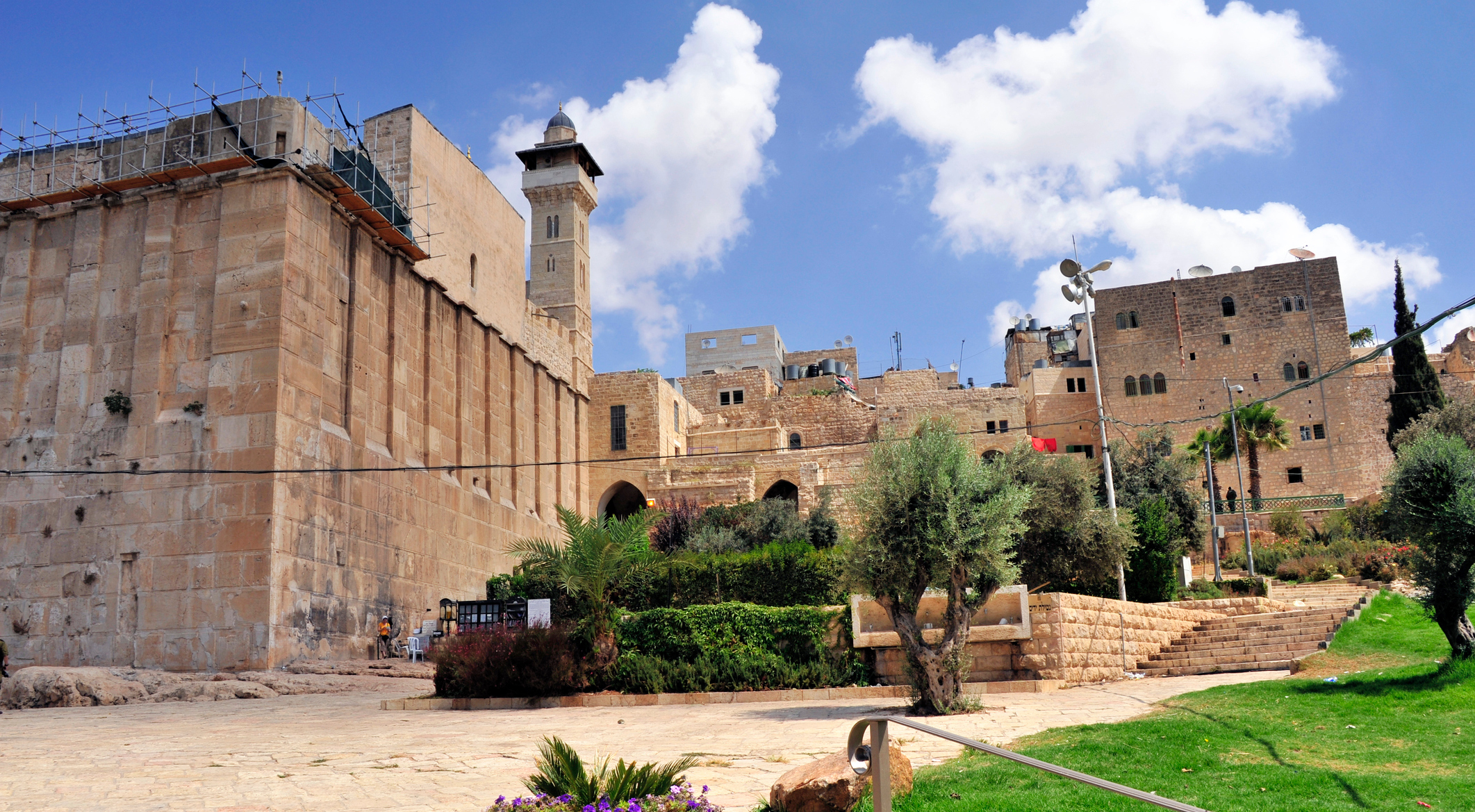
“At the end of forty years, Avshalom said to the king, ‘Please let me go to Hevron and fulfill the vow I made to Adonai.'”-2 Samuel 15:7
Let’s start things off today with a quiz question.
Next to Jerusalem, which city in Israel holds the most Hebrew significance?
Now, don’t be saying anything dumb like Tel Aviv.
Okay, so the answer is Hebron.
Here are 7 interesting facts about this city that you probably had no idea about.
1. Hebron is One of the Oldest Continuously Inhabited Cities
Hebron is over 4,000 years old, making it one of the oldest continuously inhabited cities in the world.
It was already a significant Canaanite city before Abraham arrived.
2. It Is the Home of the Cave of the Patriarchs (Machpelah)
The Cave of Machpelah, also known as the Tomb of the Patriarchs, is believed to be the burial site of Abraham, Sarah, Isaac, Rebekah, Jacob, and Leah.
It is considered the second-holiest site in Judaism after the Temple Mount in Jerusalem.
Interestingly, this site is also revered by Muslims, who refer to it as the Ibrahimi Mosque, after Abraham (Ibrahim in Arabic).
3. It Is the Only City Where the Bible Says Abraham Bought Land
In Genesis 23, Abraham purchases the Cave of Machpelah from Ephron the Hittite.
This is one of the few instances where the Bible explicitly describes a land purchase, including the price (400 shekels of silver), giving it unique legal significance in Jewish tradition.
4. It Is Famous for Its Grapes
In ancient times, Hebron was known for its vineyards and massive clusters of grapes.
Remember the story in Numbers 13:23, where the spies brought back a huge cluster of grapes from the Valley of Eshcol near Hebron?
That reputation continues today.
Grapes are still a major local crop.
5. Hebron Glass
Hebron has a centuries-old tradition of hand-blown glassmaking.
You can still find families making colorful glassware using ancient techniques passed down for generations.
6. It Is A City of Palestinian-Israeli Conflict and Coexistence
Hebron is one of the only cities in the West Bank where Jewish and Arab populations live nearby, often leading to tension, but also to stories of neighborly cooperation.
It’s a place of deep complexity in modern Israeli-Palestinian relations.
7. It is David’s First Capital
Before Jerusalem, King David ruled from Hebron for seven and a half years. It was there that the tribe of Judah anointed him as king (2 Samuel 2:1-4).
It is that last point in particular that connects to our current position in our study of Chapter 15 in 2nd Samuel.
We see that Hebron held much significance for David’s family.
Not only was it where David first became king, but it was also where Absalom was born.
It was far enough from Jerusalem that if Absalom’s plan to take the throne failed, he could run and hide there.
Additionally, it had strong walls and old buildings, making it well-fortified.
So when Absalom decided to proclaim himself king in Hebron, strategically speaking, it was a wise move.
Why?
Because the people held great respect for this place.
It was jam-packed with Hebrew history and tradition.
We’re told there was even a worship center there.
That’s why Absalom told everyone he needed to leave Jerusalem and go to Hebron to fulfill a vow he had made to Adonai.
When I say “fulfill a vow,” usually that meant to offer a sacrifice at the altar.
So, going to Hebron would have made perfect sense to the people around him.
Alrighty, what’s the takeaway for today?
It’s this:
Biblical cities aren’t just background scenery.
When the Bible mentions a place, like Hebron, it ain’t just tossing out some random ancient name to make things sound old and important.
Ya feel me?
These places mattered.
People knew their history, their meaning, and their reputation.
And so did the characters in the Bible.
Absalom didn’t choose Hebron by accident.
He picked a place loaded with heritage, spiritual weight, and royal memories.
It was where his father, David, first became king.
It was where worship still happened.
And it was far enough from Jerusalem to give him a backup plan if things went south.
So next time you’re reading the Bible and come across a city or location, don’t just gloss over it like the rest of the population does.
Stop and ask:
Why there?
Why now?
What did the people of that time know about this place that I might be missing?
Because once you understand the meaning behind the map…
The behavior of the people starts to make a whole lot more sense.
Are ya feeeeeeeeeling me here?


Leave a Reply